
Christmas Scams 2025 – 7 Top Holiday Frauds & How to Stay Safe
 Click to Zoom
The holiday season is a time for joy, family, and festive shopping. Unfortunately, it’s also a peak season for scammers who exploit the rush and generosity of this time of year. As online activity surges, cybercriminals launch sophisticated campaigns to steal money and personal information.
In this guide, we’ll break down the most common Christmas scams of 2025, show you the red flags to look for, and provide actionable steps to keep your holiday season safe and secure.
Key Takeaways: How to Avoid Holiday Scams
- Always Verify: Before clicking, donating, or buying, verify the website, charity, or sender.
- If It Seems Too Good to Be True, It Is: Unbelievable discounts are a major red flag for fake stores and scams.
- Use Secure Payment Methods: Stick to credit cards or PayPal, which offer fraud protection. Avoid direct bank transfers or gift cards for payments.
- Never Click Suspicious Links: Go directly to the source. Type the courier’s or retailer’s website address into your browser manually.
Top 7 Christmas Scams of 2025
Scammers are creative, but their tactics often follow predictable patterns. Here are the top holiday frauds to watch out for this year.
1. Fake Online Shopping Websites
 Click to Zoom
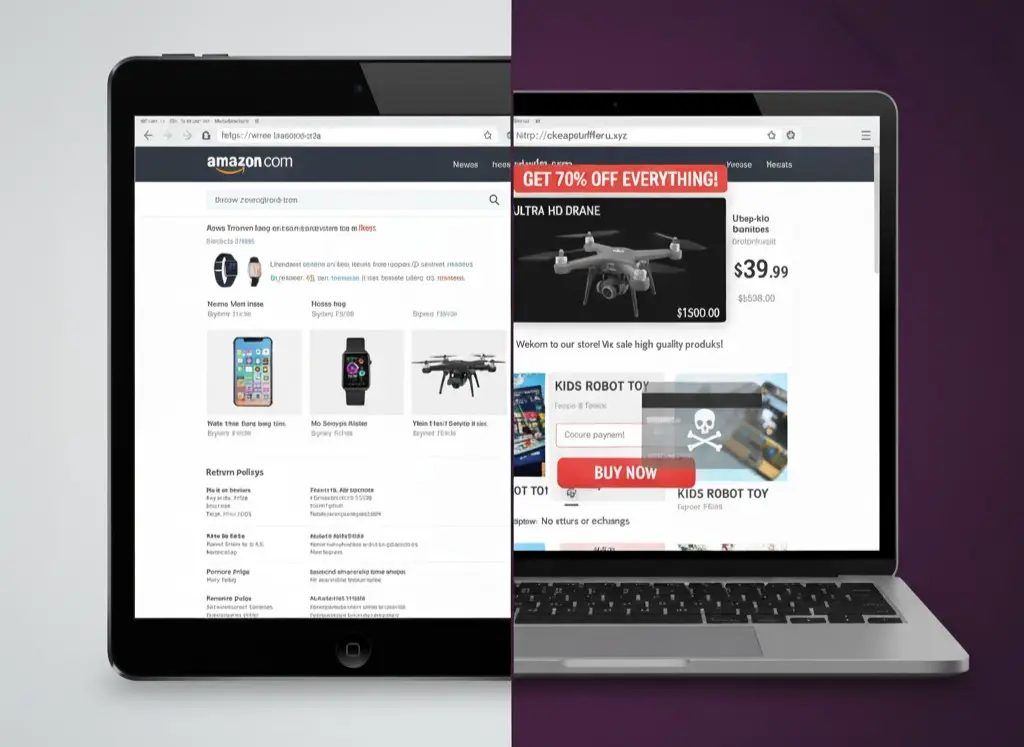
Fraudsters create slick, professional-looking e-commerce stores that mimic legitimate brands or offer in-demand products at massive discounts.
How it Works
You see an ad for a popular gadget or toy at 70% off. You visit the site, enter your payment details, and make a purchase. The item never arrives, or you receive a cheap counterfeit. Worse, the scammer now has your credit card information.
Red Flags
- Prices that are drastically lower than any other retailer.
- Recently registered domain names (you can check using Whois.com).
- Poor grammar, spelling mistakes, and low-quality images.
- A lack of contact information, physical address, or return policy.
- The URL doesn’t start with https:// (the ‘s’ stands for secure).
2. Delivery and Shipping Phishing Scams
 Click to Zoom
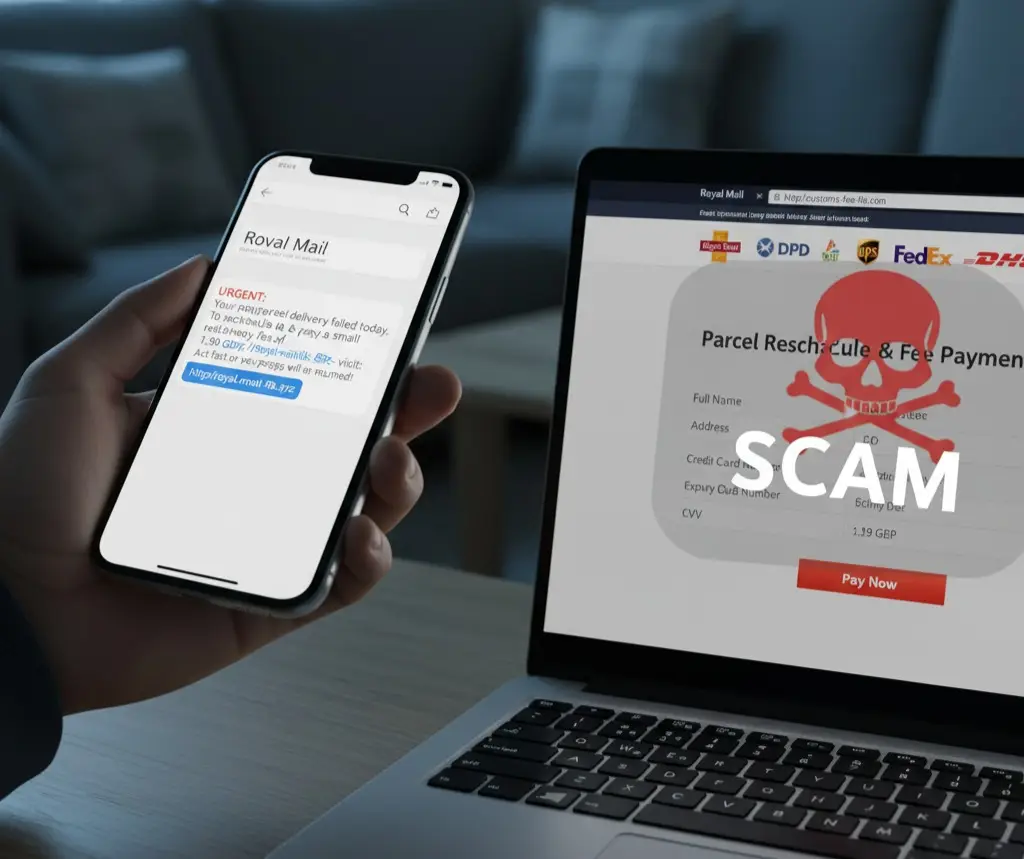
With a surge in online orders, scammers send fake delivery notifications via text (smishing) or email (phishing) pretending to be from Royal Mail, DPD, DHL, UPS, or FedEx.
How it Works
You receive a message claiming a “delivery attempt failed” or that you need to pay a “customs fee.” The message contains a link to reschedule or track your parcel. This link leads to a phishing site designed to steal your login credentials or financial details.
Red Flags
- The message creates a sense of urgency (e.g., “your package will be returned”).
- It asks for personal information or payment to release a package.
- The sender’s email address is a generic public domain (like @gmail.com) or a misspelled version of a real company.
3. Gift Card Scams
 Click to Zoom
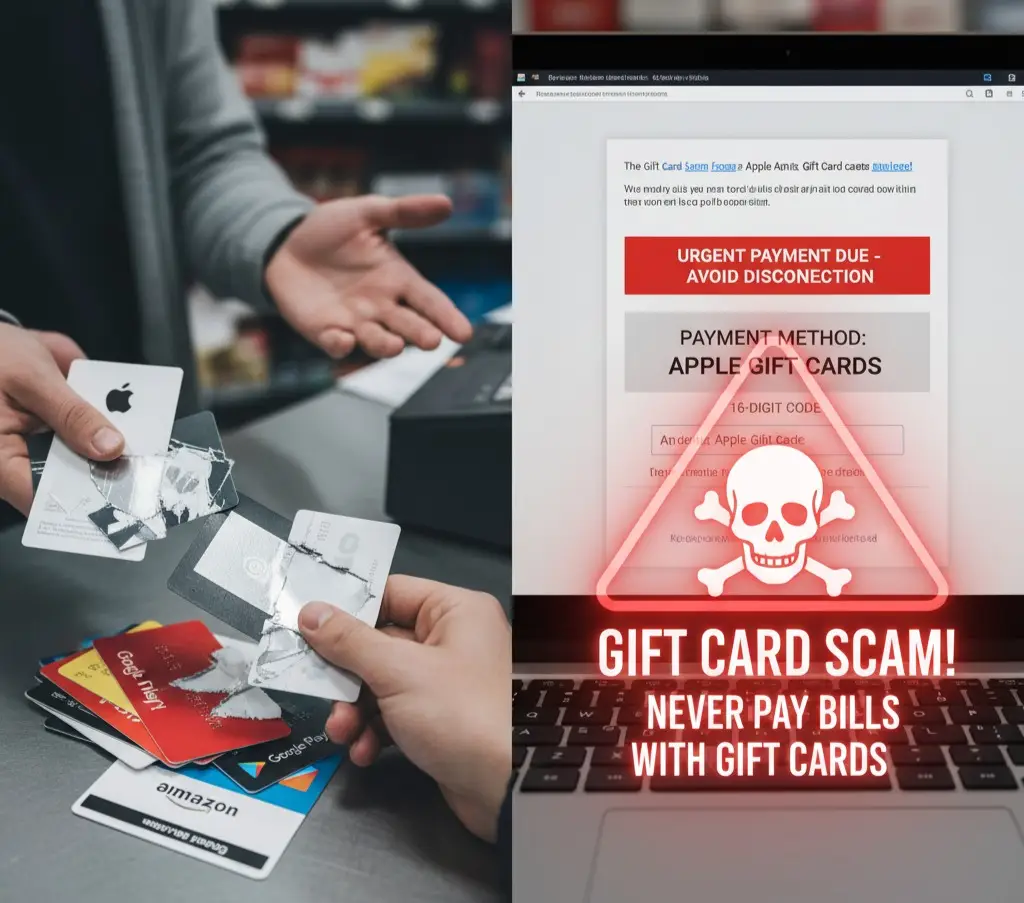
Gift cards are a top holiday present, making them a prime target for fraud.
How it Works
Scammers may sell fake or previously used gift cards on auction sites. Another common trick involves impersonating a company (like Apple or your utility provider) and demanding payment for a fake fee or overdue bill via gift card codes.
Recommended Articles
Red Flags
- Anyone asking for payment specifically with a gift card is a scammer. Legitimate businesses do not operate this way.
- Auction listings for digital gift cards from unverified sellers.
- Physical cards in stores with the PIN area already scratched off or tampered with.
4. Fake Charity Appeals
 Click to Zoom
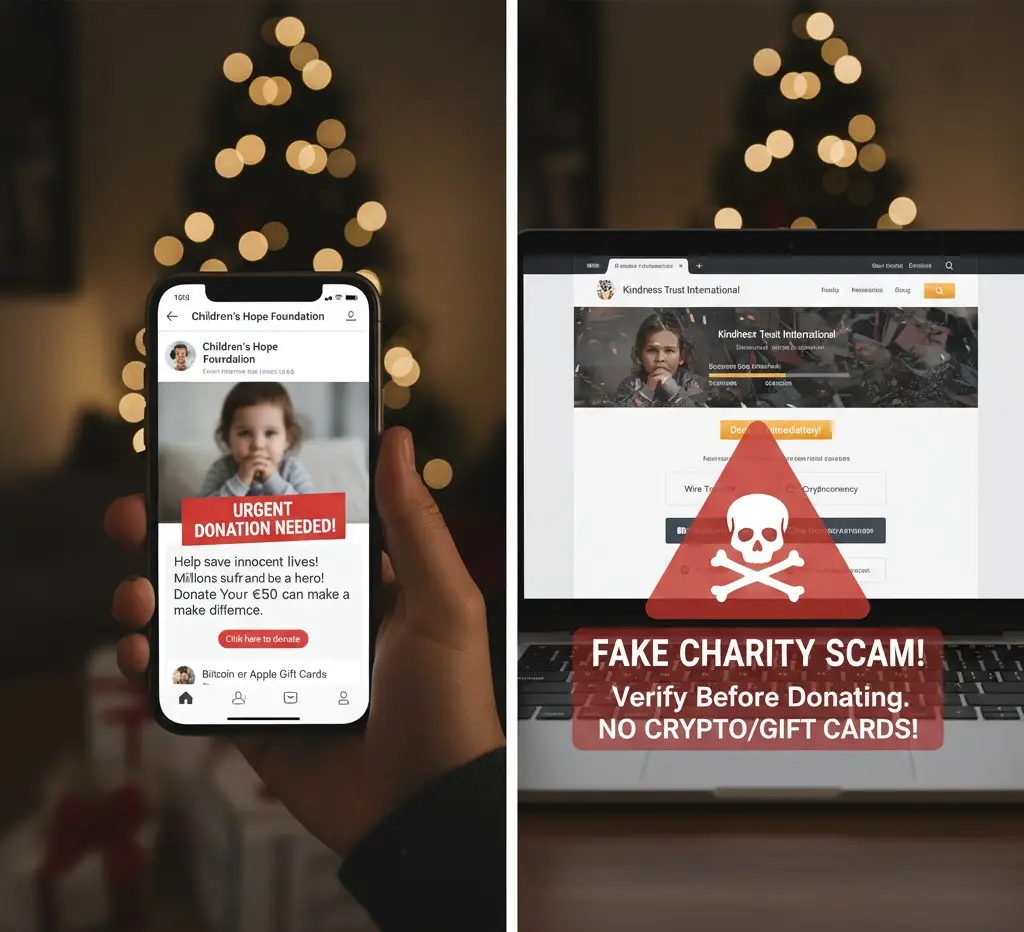
Scammers prey on holiday generosity by creating fake charities. They often use emotive stories and names that sound very similar to well-known, legitimate organizations.
How it Works
You receive an email or see a social media post asking for urgent donations for a compelling cause, such as sick children or disaster victims. You donate, but the money goes directly into the scammer’s pocket.
Red Flags
- Vague mission statements and no specific details about how your donation will be used.
- High-pressure tactics urging you to “donate immediately.”
- Requests for donations via wire transfer, gift card, or cryptocurrency.
5. Social Media Shopping Scams
 Click to Zoom
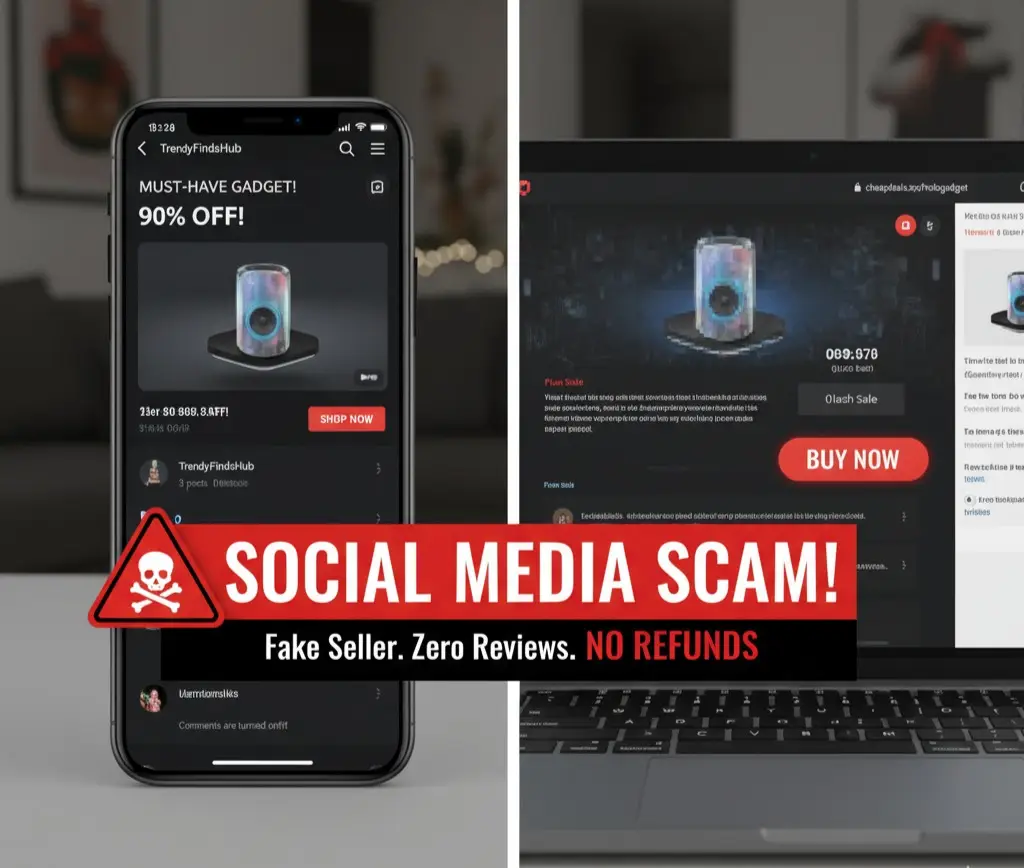
Instagram, Facebook, and TikTok are flooded with ads during the holidays. Scammers use these platforms to promote trendy items that don’t exist.
How it Works
A professionally made video ad showcases a unique, must-have product at a great price. After you click and pay, the product never ships, and the seller’s social media page disappears.
Red Flags
- The seller’s account is new or has very few followers and posts.
- Comments on the ads are turned off or are all generic and positive.
- The ad directs you to a makeshift online store instead of a reputable marketplace.
6. Malicious Holiday Deals & E-Coupons
 Click to Zoom
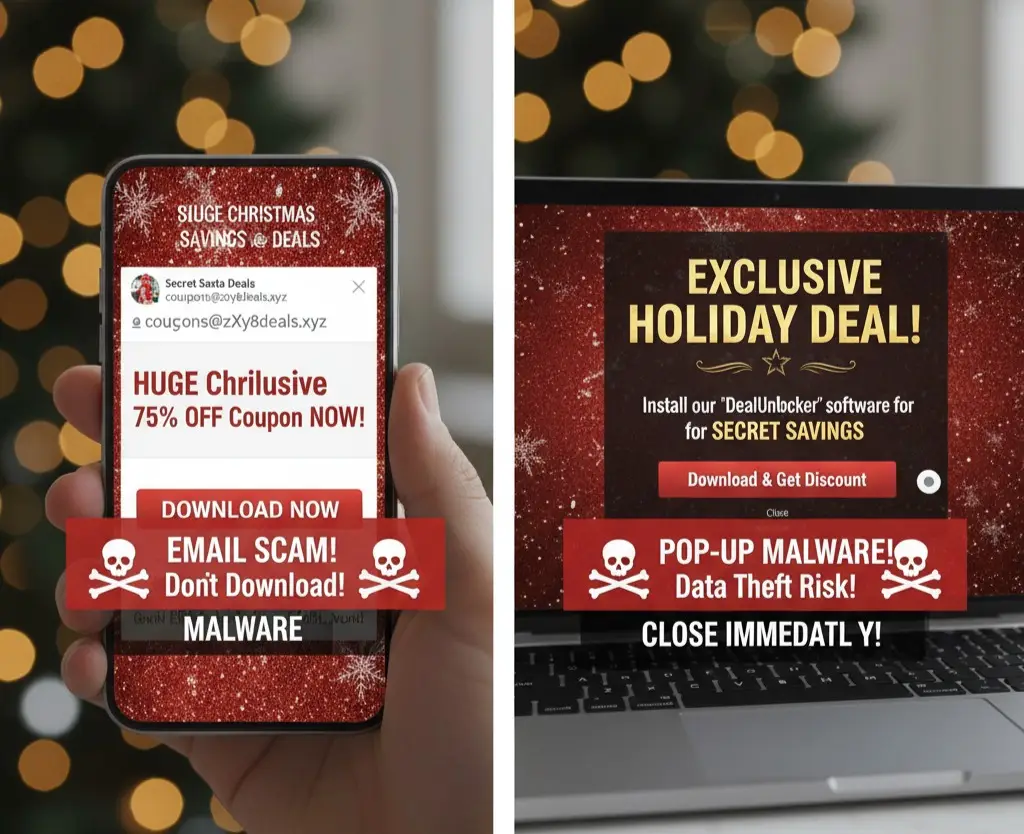
Emails or pop-ups advertising “exclusive Christmas discounts” can be a gateway for malware.
How it Works
You receive an email with a “secret” coupon for a major retailer. Clicking the link or downloading the attachment installs spyware or ransomware on your device, giving criminals access to your files and passwords.
Red Flags
- Unsolicited emails with attachments from unknown senders.
- Pop-up ads that are difficult to close or that prompt an immediate download.
- Offers that require you to install software to access the deals.
7. Holiday Investment & Crypto Scams
 Click to Zoom
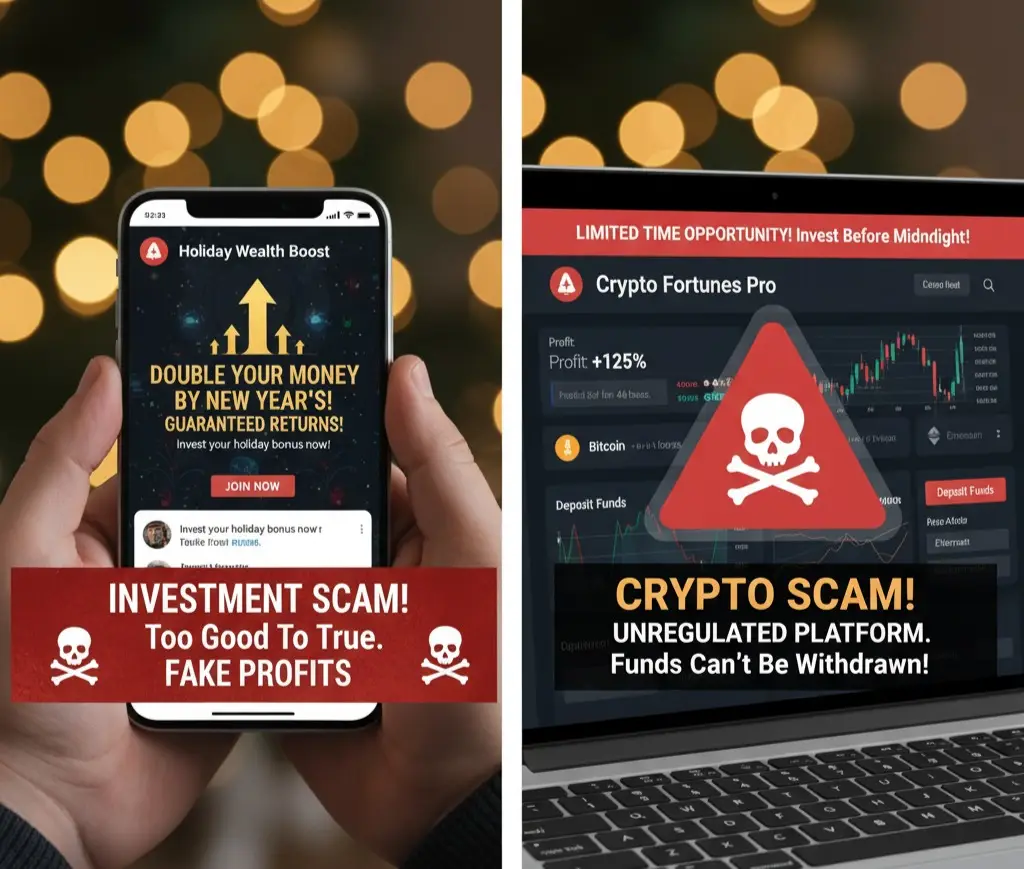
Scammers know people often receive holiday bonuses and look for ways to invest their savings. They promote fake crypto or stock platforms promising huge, guaranteed returns.
How it Works
You see an ad for an investment that promises to “double your money by New Year’s.” The platform looks legitimate, but after you deposit funds, it becomes impossible to withdraw them, and the site eventually vanishes.
Red Flags
- Promises of “guaranteed” or “risk-free” high returns.
- Pressure to invest quickly before the “opportunity” disappears.
- Unregulated platforms with no verifiable company information.
How to Stay Safe from Christmas Scams in 2025
Protecting yourself is easier than you think. By adopting a few cautious habits, you can shop and give with confidence.
1. Protect Your Online Shopping
- Stick to Official Retailers: Shop directly from official websites (e.g., Amazon.com, JohnLewis.com) or well-known marketplaces.
- Investigate New Sites: Before buying from an unfamiliar store, check its domain age and search for independent reviews on sites like Trustpilot.
- Use Secure Payment: Always use credit cards or services like PayPal. They offer buyer protection and allow you to dispute fraudulent charges.
2. Watch Out for Fake Delivery Messages
- Don’t Click, Go Direct: Never click links in unexpected texts or emails. Go directly to the courier’s official website and enter your tracking number there.
- Enable 2FA: Set up two-factor authentication on your email and shopping accounts for an extra layer of security.
3. Be Careful with Gift Cards
- Buy from Trusted Sources: Purchase gift cards directly from the retailer’s store or official website.
- Treat Them Like Cash: Never give the numbers on the back of a gift card to someone you don’t know.
4. Verify Charities Before Donating
- Do Your Research: Use official registers like the Charity Commission (UK) or Charity Navigator / BBB Wise Giving Alliance (US) to verify an organization’s legitimacy.
- Donate Securely: Make donations through the charity’s official website, not through social media DMs or unsolicited links.
Final Verdict
The Christmas season should be about family, love, and joy—not fraud. By learning to recognize these common scams in 2025 and adopting safe online practices, you can protect your finances and enjoy a worry-free holiday.
Stay alert, trust your instincts, and share this knowledge with friends and family. Let’s make this holiday season scam-free for everyone.
FAQ’s About Christmas Scams 2025
What is the most common Christmas scam?
Fake online stores and delivery phishing scams are consistently the most reported holiday frauds. The high volume of online shopping and shipping makes it easy for scammers to blend in.
What should I do if I think I’ve been scammed?
If you’ve been scammed, act quickly:
- Contact your bank or credit card company immediately to report the fraud and block your card.
- Report the incident to the relevant authorities, such as Action Fraud (UK) or the FTC (US) at ReportFraud.ftc.gov.
- Change your passwords, especially if you believe your account credentials have been compromised.
Are QR code scams common during the holidays?
Yes, “quishing” (QR code phishing) is on the rise. Scammers place fake QR codes on public surfaces or in emails that lead to malicious websites when scanned. Only scan QR codes from trusted sources.
Have you been scammed?
If you have lost money or suspect a website is fake, report it to us immediately to warn others.
REPORT A SCAM NOW