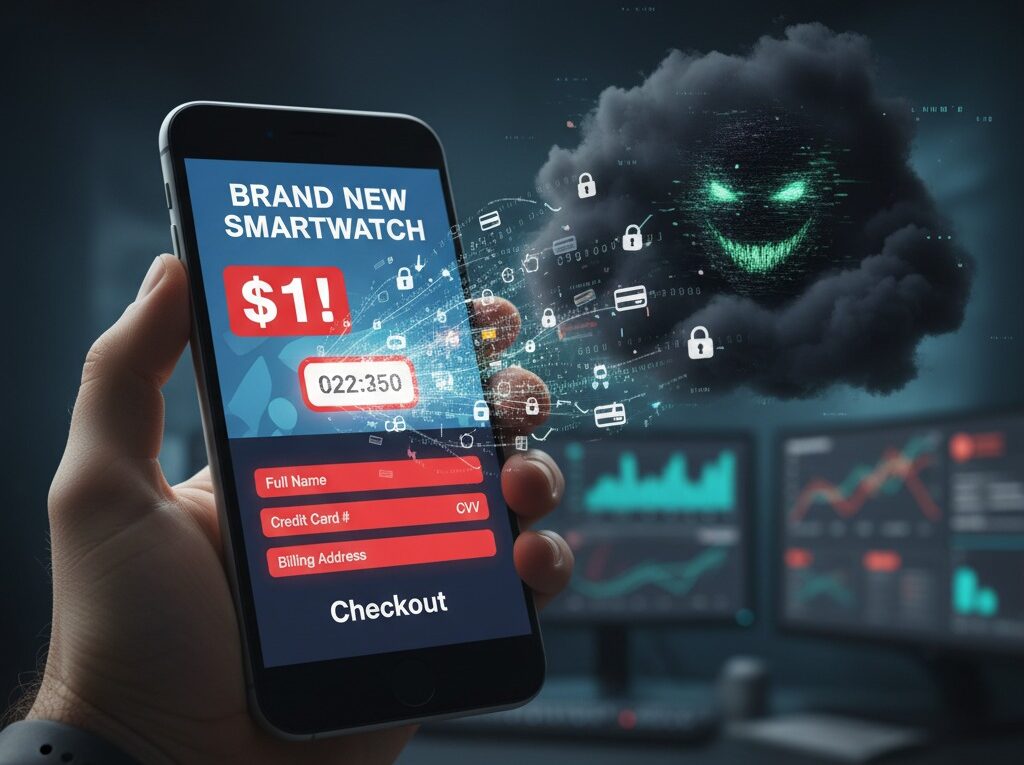
The $1 Scam
You’re scrolling online, half paying attention, when a bright ad pops up—maybe it’s a shiny new gadget, some trendy jewelry, or just something you suddenly feel like you need. And it’s only a buck. One dollar. Sounds crazy, right? But that’s exactly how they get you.
It’s called the $1 Scam, and it’s a trap that’s showing up all over the internet. The real price isn’t a measly dollar, it’s your identity.
You probably think, “Hey, it’s just a dollar—what’s the worst that could happen?” The answer: a lot. This kind of scam can open the door to a whole mess of problems. Let’s break down how it works and what you can do to avoid getting caught.
What’s the $1 Scam?
Scammers set up fake online stores usually slapped together in a hurry and blast them all over social media with ads promising deals that no real business could offer. That’s the hook.
When you try to buy that can’t miss item, you get sent to a checkout page where they want your name, shipping address, phone number, email, and of course your credit card info.
You pay your dollar, hit order, and wait. But the package never comes. Instead, you’ve just handed over a goldmine of personal and financial info to someone hoping to cash in.
Why Do They Want Your Info?
Spoiler: it’s not about the dollar. That tiny price is just bait. What scammers really want is your data and your payment info. Here’s what they do next:
1. Stealing Your Payment Details
This is where the real damage happens. With your full credit card details, scammers can:
- Go on spending sprees with your card, racking up charges before you even notice.
- Sell your info (“fullz”—your name, address, card details) on shady corners of the internet.
- Test your card with more small purchases, just to see how much they can get away with.
2. Harvesting Your Personal Info
Your name, address, email, and phone number are a treasure chest for identity thieves. They can:
- Open new credit cards or loans in your name.
- Send you fake emails or texts that look legit, trying to trick you into giving up even more.
- Build out a whole profile for deeper identity theft.
3. The Sneaky Subscription Trap
Sometimes that $1 deal hides an even nastier surprise. Buried in the fine print is a subscription that charges you way more every month. These are tough to cancel, and the charges can pile up fast.
How to Spot a $1 Scam
Scam sites are getting slicker, but if you look close, you’ll see the cracks:
- The deal’s just impossible. No one sells a brand-new gadget for a dollar and stays in business.
- You’ve never heard of the website. A quick search for “[site name] reviews” or “[site name] scam” can tell you a lot.
- The site looks sloppy—typos, low-res images, weird layouts.
- There’s no real contact info. Real stores have an address, phone number, and a legit “About Us” page. Scam sites often hide behind a fake email or sketchy contact form.
- They push you to act fast—timers counting down, “Only 3 left!” banners, all designed to make you panic and click.
What If You Already Fell for It?
If you realize you’ve entered your details on one of these sites, you must act fast.
- Contact Your Bank or Credit Card Company Immediately: Call the number on the back of your card. Report that your card details have been compromised and request to freeze or cancel the card. They will issue you a new one.
- Monitor Your Statements: Keep a close eye on your bank and credit card statements for any unauthorized charges, big or small. Report any you find immediately.
- Change Your Passwords: If you used a password on the scam site that you use anywhere else, change it on those other accounts immediately.
- Place a Fraud Alert: Consider placing a fraud alert with the major credit bureaus (Equifax, Experian, TransUnion). This makes it harder for scammers to open new accounts in your name.
In the world of online shopping, skepticism is your best defense. Your personal and financial data is worth far more than $1. Protect it.
