
The 5-Minute Rule: The Easiest Psychological Trick to Stop a Scam

 Click to Zoom
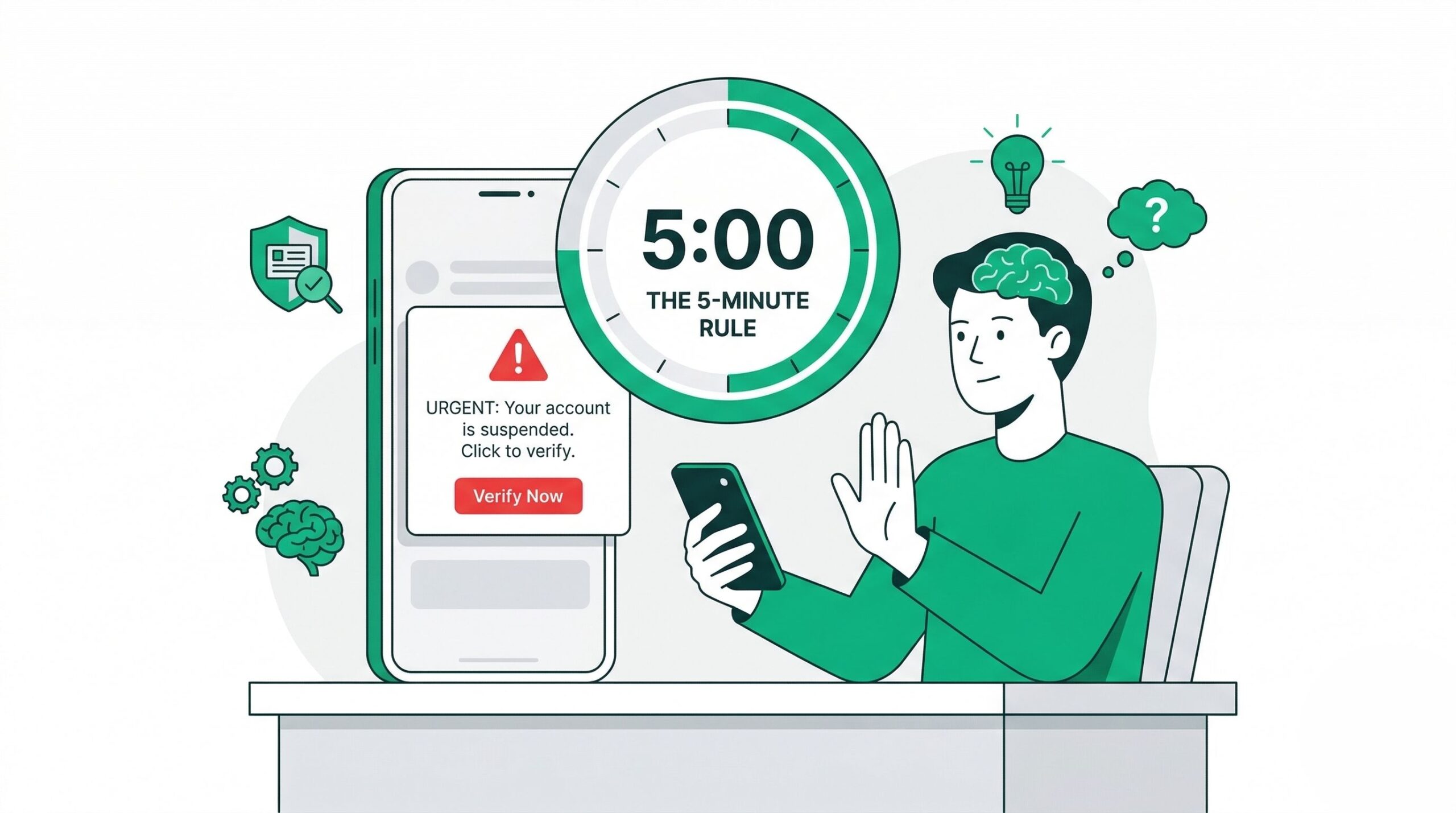
Fraudsters steal your money by hacking your nervous system before they touch your device. The 5-Minute Rule is a mandatory protocol to sever the psychological tether of a social engineering attack. When a text, email, or phone call demands immediate action regarding your finances, data, or personal safety, you must halt all interaction for exactly 300 seconds. This enforced time delay allows your prefrontal cortex to regain control from the amygdala. It neutralizes the artificial urgency and manufactured fear that scammers weaponize to bypass your logical defenses.
Click to Zoom
Fraudsters steal your money by hacking your nervous system before they touch your device. The 5-Minute Rule is a mandatory protocol to sever the psychological tether of a social engineering attack. When a text, email, or phone call demands immediate action regarding your finances, data, or personal safety, you must halt all interaction for exactly 300 seconds. This enforced time delay allows your prefrontal cortex to regain control from the amygdala. It neutralizes the artificial urgency and manufactured fear that scammers weaponize to bypass your logical defenses.
Why Urgency is the Attack Vector
Scams are precise psychological operations. Criminals do not want you to think. They want you to react. They achieve this by inducing a state of acute stress.
Amygdala Hijack vs. Executive Function
When you receive an alert about a compromised bank account or an impending arrest warrant, your brain floods with cortisol and adrenaline. This physiological response is an amygdala hijack. Your brain shifts into survival mode. Rational thought, governed by the prefrontal cortex, shuts down completely.
Scammers depend entirely on this biological override. They fabricate strict deadlines and dire consequences. The 5-Minute Rule acts as a forced system reboot. Five minutes is the exact biological window required for acute stress hormones to begin dissipating. Once the chemical flood recedes, the logical flaws in the attack become glaringly obvious to the victim.
How to Execute the 5-Minute Rule Protocol
Implementing this rule requires absolute discipline. You must treat any unsolicited, high-pressure communication as a hostile breach attempt on your personal infrastructure.
- Initiate a Total Communication Blackout: Hang up the phone immediately. Do not say goodbye. Close the email. Lock your phone screen. Any continued engagement feeds the attacker valuable psychological data.
- Create Physical Distance: Stand up and walk away from the device. A physical change of state accelerates the reduction of stress hormones and breaks the visual fixation on the threat.
- Engage Out-of-Band Verification: After five minutes, verify the claim using a completely separate and trusted channel. If the caller claimed to be your bank, call the number physically printed on the back of your debit card. Do not use the phone number or web link provided in the initial alert.
Recognizing the Manufactured Triggers
You must identify the specific emotional levers criminals pull to force an immediate response. Attackers cycle through specific psychological profiles to find your vulnerability.
- The Authority Override: Attackers impersonate law enforcement, tax agencies, or bank fraud departments. They use bureaucratic jargon to establish dominance and force blind compliance.
- The Impending Doom: Threats of account suspension, legal action, or physical harm are designed to paralyze your analytical thinking. Fear is the ultimate catalyst for compliance.
- The Artificial Windfall: Promises of sudden wealth, lotteries, or exclusive investments weaponize greed. Greed blinds logic just as effectively as fear.
Time Delay Impact on Fraud Success Rates
The correlation between immediate action and financial loss is absolute. Pausing the interaction breaks the attack chain and mathematically decreases the probability of a successful theft.
| Action Delay Timeline | Attacker Control Level | Victim Logical Processing | Likelihood of Financial Loss |
| 0 to 60 Seconds | Maximum | Suppressed | Critical Risk |
| 1 to 3 Minutes | Degraded | Recovering | High Risk |
| 5 Minutes (Protocol Met) | Severed | Restored | Minimal Risk |
| 10+ Minutes | Terminated | Fully Active | Zero Risk |
Your money is safe until you authorize the transfer. Your data is secure until you hand over the login credentials. The attacker relies entirely on your compliance to execute the final stage of the theft. Deny them the immediate reaction. Take your five minutes. Protect your assets.
Subscribe for alerts on new scams and real opportunities.
Have you been scammed?
If you have lost money or suspect a website is fake, report it to us immediately to warn others.
REPORT A SCAM NOW


