
Yhang Mhany’s Journey from Victim to Fraud Buster

 Click to Zoom
If you are reading this, you are probably exactly where I was in 2020. You’re looking for a way out. You’re looking for that extra $500 a month to breathe a little easier. You want to believe that the internet is the great equalizer, a place where a smart kid with a laptop can change their life.
I believed that too. And because I believed it so hard, I got crushed.
I’m not here to sell you a course. I’m here to tell you the truth about how I lost my time, my money, and my dignity to three specific platforms that promised the world and delivered nothing but ash. This is my origin story. It isn’t pretty, but it’s the reason Earn More Cash Today exists.
The “Wild West” Era: 2020
Let’s go back to 2020. The world was locked down. Fear was everywhere, but so was opportunity — or so it seemed. Everyone was talking about Bitcoin. Everyone was talking about “passive income.”
I was young, ambitious, and naive. I saw screenshots of dashboards showing thousands of dollars in daily earnings. I didn’t know yet that a dashboard is just a webpage. I didn’t know that anyone with basic coding skills can make a number on a screen go up.
I was hungry for success. And as I soon learned, hunger makes you blind.
The Ecoin Deception
To be honest, my first heartbreak was a girl. My second was a token called Ecoin.
If you were around then, you remember the hype. It was inescapable. The pitch was seductive in its simplicity: “The World’s First Email-Based Proxy Identity.” They claimed they were going to bypass the complex banking system and create “Mass Adoption” simply by giving the coin away for free to everyone with an email address.
It sounded democratic. It sounded revolutionary.
Recommended Articles


I signed up. I saw 1,000 Ecoins hit my dashboard instantly. Then I referred a friend. Boom. Another 1,000.
I became obsessed. I spent nights I should have been sleeping spamming my referral link in Facebook groups, WhatsApp chats, and forums. I watched that number on my dashboard climb. 10,000 Ecoin. 50,000 Ecoin. I did the math in my head based on their “projected value.” I was sitting on a small fortune. I started planning what I would buy.
The Moving Goalposts
Then came withdrawal day.
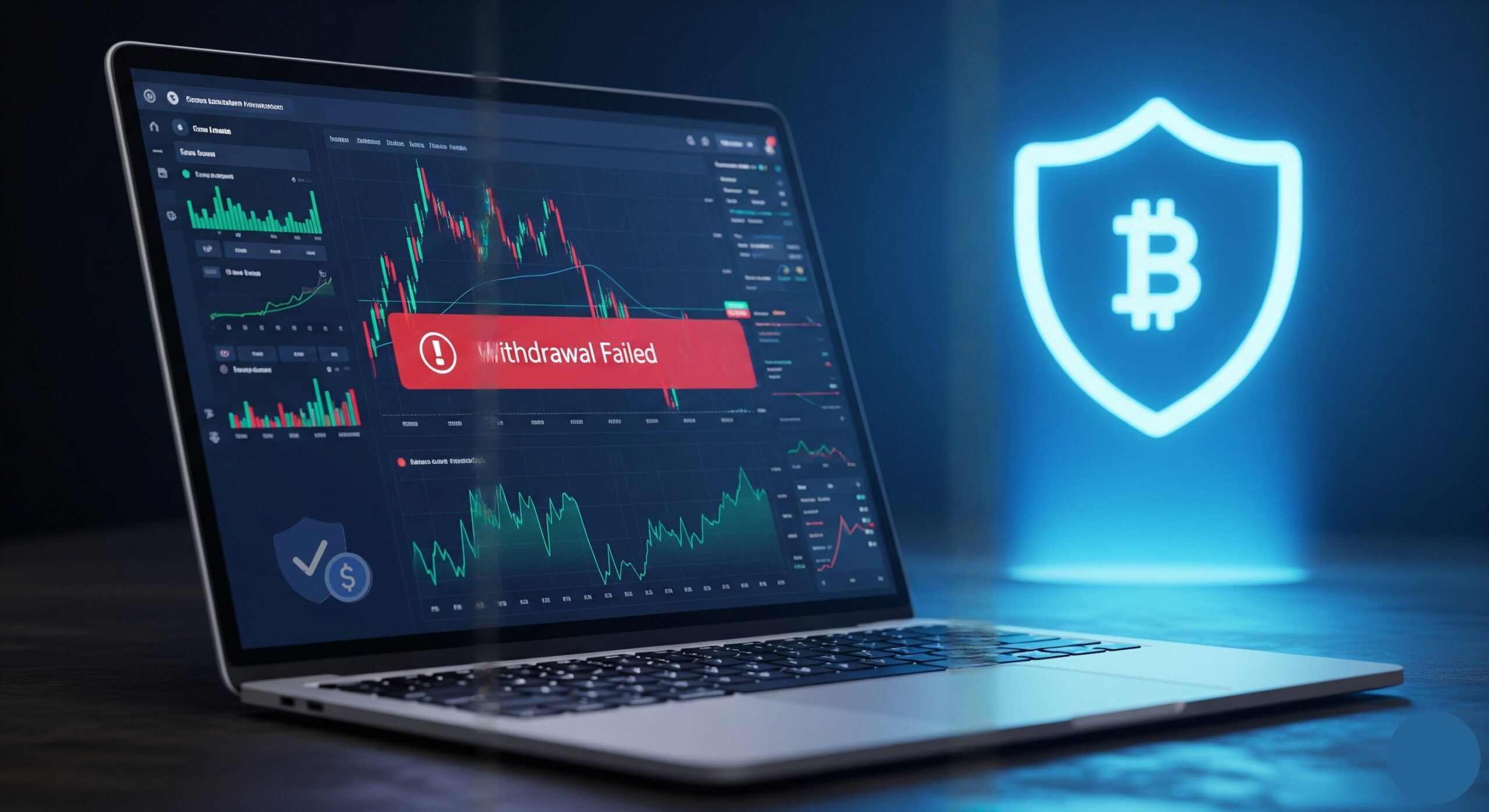
I logged in, heart pounding, ready to cash out. But the button was greyed out. A pop-up appeared: To prevent fraud, you must refer 5 more active users.
 Click to Zoom
Okay, fine. I hustled. I got the users.
I went back. The button was blue! I clicked it.
Error: You must now link a Telos wallet to verify your identity.
I downloaded the wallet. I linked it. I felt a knot forming in my stomach. Why was this so hard?
Then came the final blow. They split the balances. There was “Current Balance,” “Future Balance,” and “Savings Balance.” Suddenly, my 50,000 coins were locked in “Savings,” earning 10% interest a month, but I couldn’t touch the principal.
I realized then that the money wasn’t real. It never was. The “value” was entirely imaginary, held up by people like me bringing in fresh victims. Mass adoption without utility isn’t a currency; it’s just inflation.
LESSON LEARNED
If a platform gives you money just for existing, that money is worthless. Value comes from scarcity and utility. If they are printing it like confetti, it will spend like confetti.
The Mineify Betrayal
If Ecoin was a heartbreak, Mineify was a mugging.
After the crypto token failure, I pivoted. I thought, “Okay, tokens are risky. Mining is the real deal. It’s infrastructure. It’s hardware.”
I found a site called Mineify. It looked incredibly professional. They had photos of massive server farms with blinking blue lights and cooling fans. They offered a “Free Hashrate” (mining power) to get started.
I watched the little counter tick up. Satoshi by Satoshi. It was mesmerizing. It felt like I was printing money while I slept.
Then I joined their Telegram group. That’s where I met “Emily.”
Emily was the community manager. She was kind. She was patient. She asked about our days. She posted updates about “new mining rigs” being installed in Iceland. When users complained about a delay, she was right there: “Hey guys, so sorry! The bank transfer is just clearing, hang tight!”
She made it feel human. She made it feel safe.
I was convinced. I didn’t just want the free plan anymore. I wanted the VIP returns. I scraped together money I really couldn’t afford to lose and bought a contract.
For three weeks, it was glorious. My dashboard showed I was making $20 a day. I was calculating my yearly income. I felt like a genius investor.
The Silence
Then, one Tuesday, the site went down. “502 Bad Gateway.”
I rushed to the Telegram group. “What’s happening?” people asked. “Is the server down?”
Emily pinned a message: “Maintenance! upgrading our cooling systems for better efficiency. Back in 24 hours!”
We waited. 24 hours passed. Then 48.
Then, the Telegram group permissions changed. You can no longer send messages to this group.
Then, Emily’s profile photo changed to a blank grey avatar. “Deleted Account.”
The server farm photos? I reverse-image searched them later. They were stock photos from a legitimate data center in Sweden that had nothing to do with Mineify.
But it wasn’t just Mineify. I fell for this exact same trap three more times that year. Different names, different colors, but the mechanism was always the same.
LESSON LEARNED
This is the golden rule of online safety. Legitimate platforms take their fees out of your earnings. Scammers demand you pay in before you can take out.
The BitcoinX Scheme
By now, you’d think I would have learned. But desperation is a tricky thing. It convinces you that this time is different.
I stumbled upon BitcoinX.ai. This wasn’t mining; this was “AI Trading.” The pitch was that their bot could trade the volatility of Bitcoin faster than a human. It promised 2% daily returns.
The admin, a guy named “Lucas,” was aggressive. He wasn’t nice like Emily. He was arrogant. He acted like he was doing us a favor by letting us use his bot. Oddly, that arrogance made me trust him more. He must be rich, I thought. He doesn’t need my money.
I put in a small deposit. It grew. I withdrew a tiny amount just to test it. It worked!
They let you win the first hand so you bet the house on the second.
I re-deposited everything.
The Rebrand
The end came weirdly. It wasn’t a server crash.
I was staring at my phone, looking at the Telegram group “BitcoinX Official.” Suddenly, the text at the top of the screen flickered.
The group name changed from BitcoinX Official to Tron3X.
I blinked. I thought my phone glitched.
Then the pinned messages disappeared. The logo changed from a blue Bitcoin B to a red Tron logo.
Lucas posted a new message: “Welcome to Tron3X! The best platform for Tron mining!”
I typed: “Wait, what happened to BitcoinX? Where is my money?”
“You have been banned from this group.”
They didn’t even shut it down. They just repainted the walls and waited for the next batch of victims. They scrubbed us out like we never existed.
LESSON LEARNED
Scammers don’t stop; they just rebrand. The code they use for these sites is recycled. They buy “HYIP” (High Yield Investment Program) scripts for $50 online, run them until they run out of new victims, and then simply change the logo.
The Turning Point
I sat in my room, staring at a blank screen. My wallet was empty. My ego was bruised. But the worst part was the shame.
I felt stupid. How could I, a guy who prided himself on being tech-savvy, fall for this? Not once, but three times?
I realized something that night. The scammers rely on our silence. They rely on the fact that when people get scammed, they feel too ashamed to talk about it. We hide it. We lick our wounds in private. And because we stay silent, the next person walks right into the same trap.
I realized that as long as there are legitimate ways to make money, the parasites will follow. They won’t stop.
So, I decided to stop trying to get rich quick. I decided to get loud.
I bought the domain earnmorecashtoday.com.
The Mission
I didn’t build this site to give you false hope. I built it to be the shield I wish I had in 2020.
My philosophy is simple: We verify so you don’t lose. We test so you don’t cry.
I went from being a victim to being a Fraud Buster. And let me tell you, exposing a scammer feels better than any fake 2% daily return ever did.
Conclusion
If you are here because you just lost money, I want you to know: It is not your fault. These systems are designed by professionals to exploit human psychology. They hack your hope.
But now you are here. Welcome to the safe side of the internet.
Read the guides. Check the blacklist. And remember: if it sounds too good to be true, it’s probably a guy named Lucas renaming his Telegram group.
Stay safe
Frequently Asked Questions (FAQ)
Is Yhang Mhany a real person?
Yes, I am. I am a blogger and digital safety advocate based in Ghana. I started my journey in the online money-making space around 2020. Unlike the anonymous admins of the sites I review, I put my name and face on my work because I believe accountability is the first step to trust.
Can you help me get my money back from a scam?
I wish I could say yes, but I must be honest: Recovery scams are real. If anyone contacts you claiming they can “hack” the blockchain or recover your lost crypto for a fee, they are lying. They are secondary scammers trying to steal more from you. The only way to “recover” is to report the fraud to local authorities and learn from the experience so it never happens again.
Subscribe for alerts on new scams and real opportunities.
Have you been scammed?
If you have lost money or suspect a website is fake, report it to us immediately to warn others.
REPORT A SCAM NOW