
“Scammers,” “Scammers,” What Exactly Do They Want?

 Click to Zoom
You get the calls, the emails, and the suspicious text messages. They all feel different—some are threatening, some are friendly, and some are “too good to be true.” But behind every scammer is a motive. So, what exactly do they want?
Click to Zoom
You get the calls, the emails, and the suspicious text messages. They all feel different—some are threatening, some are friendly, and some are “too good to be true.” But behind every scammer is a motive. So, what exactly do they want?
While the methods are endless, the end goal is almost always the same: your money.
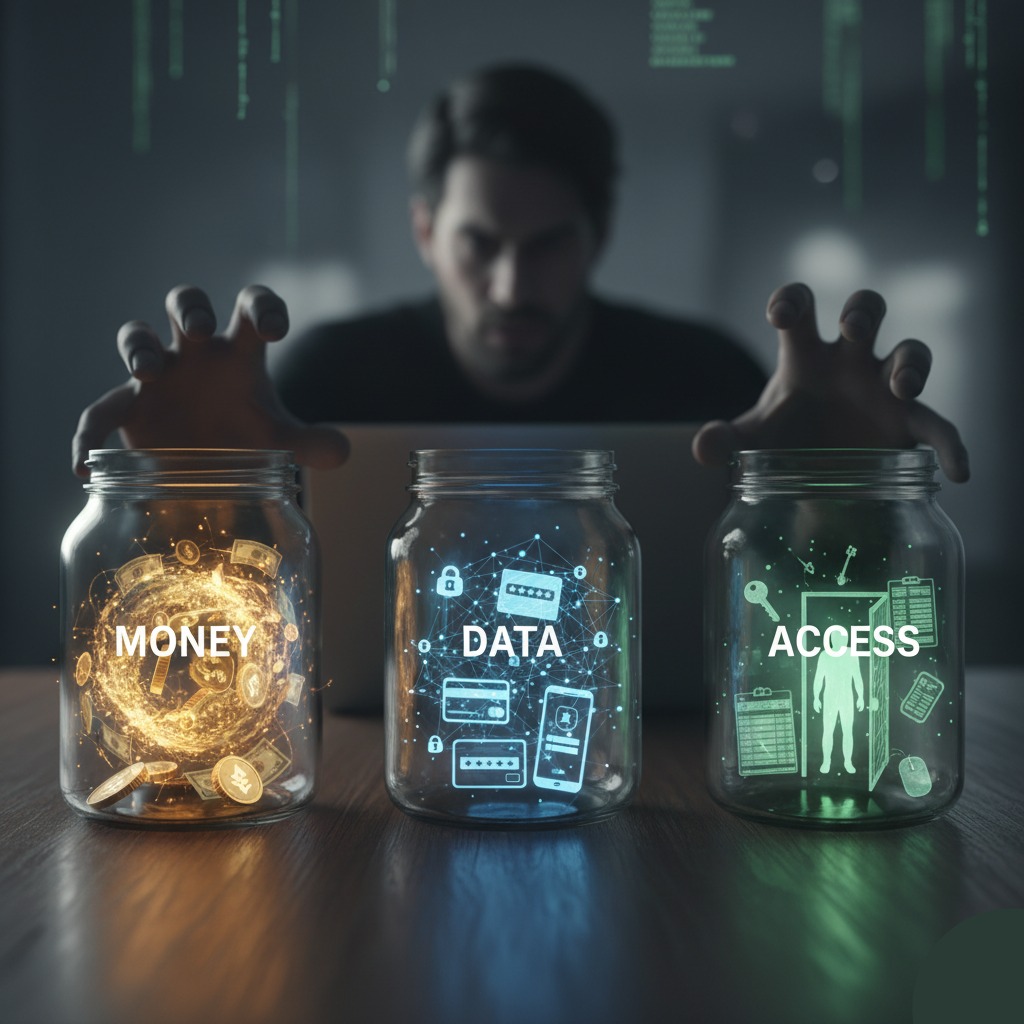
To get to that money, however, they have a short list of targets. This article breaks down the three primary assets scammers are actively trying to steal from you, from the obvious cash to the valuable data you might not realize is just as good as gold.
1. Your Money
This is the primary driver for the vast majority of scams. The scammer’s entire plot is designed to trick, or manipulate you into sending them funds in a way that is immediate and irreversible.
Their tactics are often psychological, preying on emotion, urgency, or fear.
- Direct Deception: This includes fake online stores, “unbelievable” investment opportunities, or lottery “winnings” that require you to pay a “fee” upfront.
- Emotional Manipulation: Romance scams are a classic example. A scammer builds a deep emotional connection over weeks or months before fabricating a crisis—a medical emergency, a legal problem, a stuck-at-the-border catastrophe—that only your money can solve.
- Urgency and Fear: These are the most aggressive scams. Think of the fake calls from the IRS, Social Security Administration, or a “law enforcement” agent claiming you have a warrant for your arrest. They demand immediate payment via gift cards, wire transfer, or cryptocurrency to “fix” the problem. They want to scare you so much that you don’t have time to think.
2. Your Personal Information
Sometimes, the scammer doesn’t want your money right now. They want the key to all your money and your entire digital life: your data.
For a scammer, your Personally Identifiable Information (PII) is a commodity. They can use it themselves or sell it on the dark web. This information is the target of “phishing” emails or “smishing” (SMS phishing) texts that impersonate trusted brands like your bank, Netflix, or Amazon.
Here is the data they’re hunting for:
- Login Credentials: Usernames and passwords for your email, bank, and social media.
- Financial Details: Credit card numbers, expiration dates, and bank account/routing numbers.
- Personal Identifiers: Your full name, address, date of birth, and, most importantly, your Social Security number.
Why do they want this info?
- To Commit Identity Theft: With your SSN and date of birth, they can open new credit cards, apply for loans, or file fraudulent tax returns in your name.
- To Perform Account Takeovers: By stealing your password, they can log in to your bank and drain your accounts.
- To Scam Your Friends: They can take over your email or social media and impersonate you, asking your friends and family for “emergency” money.
3. Your Access & “Clean” Record
This is a more sinister and less-understood goal. Scammers don’t just want your money; they want to use you to move other people’s stolen money.
This is known as a “money mule” scheme. It’s often disguised as a “work-from-home” job. The “job” consists of receiving money into your personal bank account and then immediately wiring it to another account (often overseas).
The money you received was stolen from another victim. By “cleaning” it through your account, the scammer launders their stolen funds and makes you an accomplice to their crime. They get away with the cash, and your bank account—and your name—are flagged for fraud. They wanted your “clean” record to do their dirty work.
Recommended Articles


It’s Always About the Payday
Whether a scammer is flattering you in a romance scam, threatening you with a fake arrest warrant, or offering you an easy job, the motivation is the same. They want the payday.
By understanding what they want—your money, your data, or your access—you can become much better at protecting what you have. The best defense is a healthy dose of skepticism. Always verify, never trust an unsolicited message, and protect your personal information as fiercely as you protect your cash.
Subscribe for alerts on new scams and real opportunities.
Have you been scammed?
If you have lost money or suspect a website is fake, report it to us immediately to warn others.
REPORT A SCAM NOW