
Trending Halloween Scams – How to Keep Ghouls Out of Your Wallet

 Click to Zoom
Halloween is a time for spooky fun, creative costumes, and indulging in sweet treats. For many, it’s the official start of the holiday season, and online shopping plays a huge role in preparing for the festivities. Whether you’re searching for the perfect “KPop Demon Hunters” costume, a 12-foot skeleton for your yard, or “Enchanted Forest” party decorations, the internet is your go-to resource. But as you hunt for the best deals, remember that scammers are also on the prowl, eager to turn your Halloween excitement into a financial nightmare.
Click to Zoom
Halloween is a time for spooky fun, creative costumes, and indulging in sweet treats. For many, it’s the official start of the holiday season, and online shopping plays a huge role in preparing for the festivities. Whether you’re searching for the perfect “KPop Demon Hunters” costume, a 12-foot skeleton for your yard, or “Enchanted Forest” party decorations, the internet is your go-to resource. But as you hunt for the best deals, remember that scammers are also on the prowl, eager to turn your Halloween excitement into a financial nightmare.
This year, online shopping scams are more sophisticated than ever. With losses from cybercrime reaching trillions of dollars, it’s crucial to be vigilant. Here are the most common Halloween scams and how you can avoid them.
1. Fake Halloween E-commerce Websites
Scammers are masters of disguise, creating fake online stores that look just like legitimate retailers. These sites often feature professional-looking designs, stolen logos, and enticing discounts on popular items. They lure you in with promises of low prices on the season’s hottest costumes, like Labubu dolls or characters from “Gabby’s Dollhouse,” only to steal your credit card information.
How to Spot a Fake Store:
- Unbelievable Deals: If a popular costume is selling for a fraction of its usual price, be suspicious.
- Check the URL: Look for misspellings or unusual domain extensions. A legitimate site for Spirit Halloween will not be spirithalloweenshop.net.
- No Contact Information: A real business will have a physical address, phone number, and customer service email.
- Poor Reviews: Search for reviews of the website. A lack of reviews or overwhelmingly negative feedback is a major red flag.
2. The “Free Spirit Halloween Goodie Box” Phishing Scam
A popular scam making the rounds on social media is the “Free Spirit Halloween Goodie Box” offer. This phishing attempt promises a free box of goodies in exchange for completing a survey and paying a small shipping fee. In reality, it’s a trick to get your personal and payment details.
How to Avoid Phishing Scams:
- Go to the Source: If you see a promotion, visit the company’s official website to verify it.
- Don’t Click on Suspicious Links: Hover over links to see the actual URL before clicking.
- Protect Your Personal Information: Never give out your personal or financial details in response to an unsolicited offer.
3. Deceptive Phishing Emails
“Your order has been delayed.” “There’s a problem with your shipping address.” These are common subject lines for phishing emails designed to create a sense of urgency. The emails may look like they’re from a reputable courier like FedEx or a major retailer, but the links inside lead to malicious websites that can install malware on your device or steal your login credentials.
How to Handle Suspicious Emails:
- Check the Sender’s Email Address: Look for misspellings or unusual domains.
- Don’t Open Attachments: Never open attachments from unknown senders.
- Track Your Orders Directly: If you’re expecting a package, go to the retailer’s or courier’s official website to track it.
4. Fake Event Tickets and Malicious QR Codes
From “Gothic Gatherings” to haunted house tours, Halloween is full of exciting events. Scammers take advantage of this by creating fake event pages on social media and selling non-existent tickets. They also use malicious QR codes in flyers and online ads to direct you to phishing sites.
How to Buy Tickets Safely:
- Purchase from Official Vendors: Only buy tickets from the event’s official website or a reputable ticket seller.
- Be Wary of QR Codes: Before scanning a QR code, make sure it’s from a trusted source.
- Use Secure Payment Methods: When buying tickets online, use a credit card or a secure payment service like PayPal.
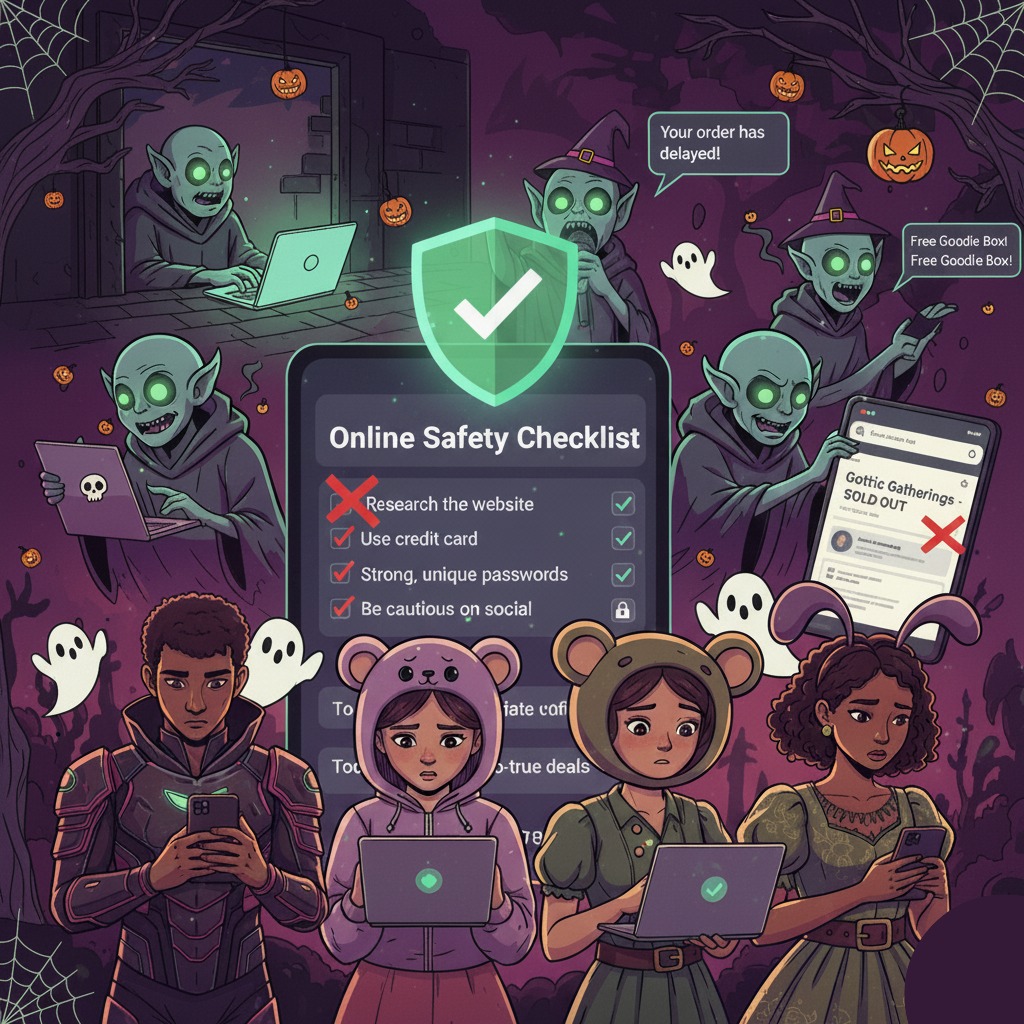
Your Halloween Online Safety Checklist
To help you stay safe while shopping for your Halloween essentials, here’s a quick checklist:
- Research the website before you buy.
- If a deal looks too good to be true, it probably is.
- Use a credit card for online purchases. This offers more protection than a debit card.
- Keep your software and antivirus programs up to date.
- Create strong, unique passwords for your online shopping accounts.
- Be cautious on social media. Don’t click on unsolicited offers or suspicious links.
By staying informed and taking these precautions, you can ensure your Halloween is all treats and no tricks. Happy haunting!
Subscribe for alerts on new scams and real opportunities.
Have you been scammed?
If you have lost money or suspect a website is fake, report it to us immediately to warn others.
Recommended Articles


